
Have you ever found yourself being suspicious of everything and everyone?
It starts with a raised eyebrow, a tightened gut, a voice that whispers, “Don’t trust it.” And for many of us, it doesn’t stop there. It becomes a pattern that is subtle at first, then constant. But here’s the real question:
Is it suspicion, or is it paranoia?
And is the suspicion serving you or slowly suffocating your ability to connect, trust, and thrive?
Let’s be honest: suspicion isn’t always wrong. Sometimes, it’s wisdom in disguise. A sixth sense. A sharpened gift honed by experience, intuition, or survival. But other times? It’s a trauma echo, a legacy from environments that taught us to always stay ready because safety wasn’t guaranteed.
There is a difference between suspicion and paranoia.
Suspicion is a cautious awareness. It’s your internal radar telling you something might be off and prompting you to pause and assess.
Paranoia, on the other hand, is when that radar is always on full blast, regardless of evidence. It’s persistent, irrational distrust that distorts reality and disrupts relationships.
Example:
If you’re suspicious, you might double-check a new coworker’s story because something didn’t add up.
If you’re paranoid, you assume your entire team is conspiring against you because they had a meeting without you even if it had nothing to do with you.
So, what happens when suspicion becomes your default?
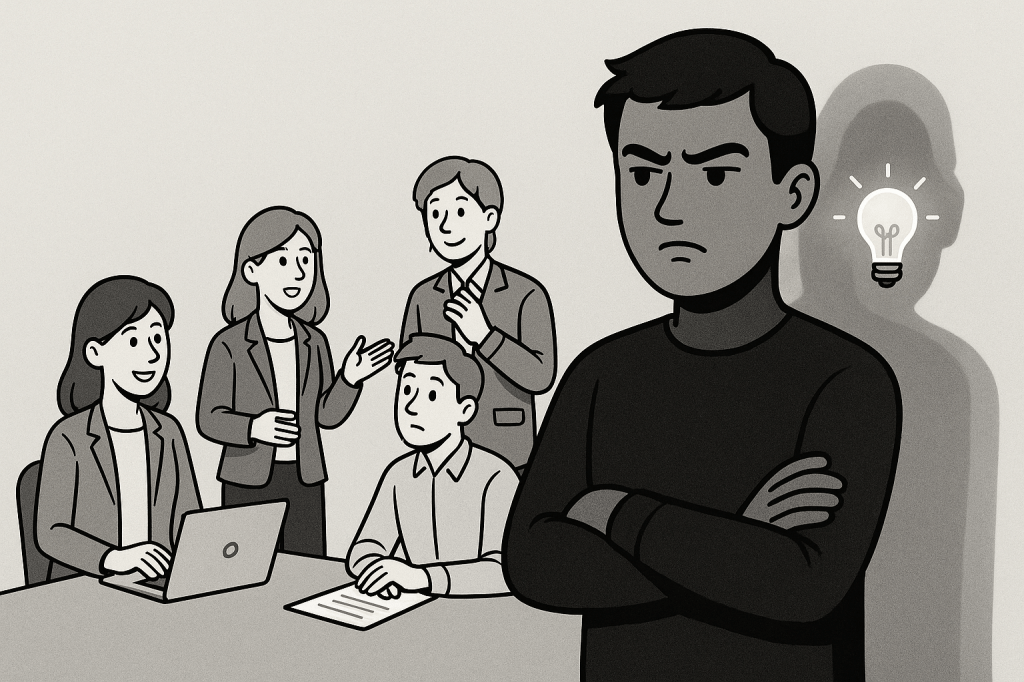
- Are you the leader who assumes everyone’s out to get ahead of you?
- Do you sit in meetings, quick to shoot down ideas that aren’t yours, afraid to be outshined?
- Do you keep people at arm’s length because getting close sets off your inner alarm?
- Do compliments feel manipulative? Does kindness trigger your guard instead of your gratitude?
Living in a world designed by suspicion is exhausting. It’s like holding your breath in every conversation, scanning every motive, second-guessing even joy. Suspicion, when misused, robs us of possibility, of peace, and of people.
But let’s not demonize it. Suspicion, when healthy, is a powerful protector.
It can keep us from danger, dishonesty, or repeating painful patterns.
The key is in knowing when it’s protecting… and when it’s preventing.
So, how do you know if your suspicion has taken the wheel?
Ask yourself:
- Do you consistently assume the worst about people, even with no evidence?
- Are you more comfortable anticipating betrayal than receiving love?
- Is your inner narrative always one of caution, distance, and distrust?
If so, it may be time to recalibrate. Not to abandon your instinct, but to put it in balance.
And here’s the hard truth: if you recognize these patterns not only in your workplace but also in your personal relationships if you find yourself second-guessing your friends, doubting your children, or anticipating disappointment from your partner it might be time to do the deeper work. Suspicion doesn’t just impact strategy and decision-making. It can quietly erode trust at home, too.
Here are a few practices to shift suspicion from sabotage to self-awareness:
- Check the origin. Ask yourself: Is this about now or something from back then? Childhood? Betrayal? Loss? Generational trauma doesn’t dissolve without effort.
- Separate fact from fear. Write down what you know versus what you feel. Then ask: Is there proof, or just a pattern?
- Be curious, not combative. Instead of assuming intent, try asking questions. You’ll be surprised what clarity and compassion can do.
- Journal the loop. Suspicion thrives in secrecy. Write down your suspicions seeing them on paper can deflate their power and reveal the real wound beneath.
- Open just a little. Trust doesn’t require jumping off a cliff. It can be a hand extended, a kind word received, or a small “yes” to connection.
What are you missing by leading with suspicion?
What relationship, opportunity, or joy has been locked out by that invisible wall?
If you’re always waiting for the other shoe to drop, you’ll never enjoy the one you’re standing in.
Suspicion can be a superpower. But it needs a wise wielder.
And that dear reader…. is you.
#EmotionalIntelligence #LeadershipGrowth #SelfAwareness #TraumaHealing #MindfulLeadership #TrustAndConnection #QuackenbushCoaching
 Quackenbush Coaching LLC