
I was too late.
The call came at work, shattering the rhythm of my day. Just yesterday I had spoken with my friend, someone I had grown up with, one of my partners in crime. Someone who pushed me to dream bigger. Someone who sat with me when I cried into my Cheerios for whatever reason I had been hurt or disillusioned at the time. They had asked me to come by. I heard something in their voice, a heaviness, but I begged off. I told myself I was tired. I told myself tomorrow would be fine.
But tomorrow never came.
I rushed to the hospital, only to be met by their mother, inconsolable in the hallway. I could not bring myself to go into the room to say goodbye. I left that day carrying a weight that never really left me, the shame of being too late, the regret of not showing up, the grief of knowing I would never again laugh with the person who helped shape me.
Not only did I not get closure, I never said I love you. I never thanked them for everything they had poured into me, all the ways they lifted me when I could not see the way forward. That is what I carried home with me that day. That is part of the pain.
I never spoke about it. I buried it instead. And it was not until well into my forties that I realized how that unresolved pain had quietly woven itself into other parts of my life, in how I showed up for others, in the moments I pulled back instead of leaning in, in the ways I let exhaustion win over presence.
We have all been there.
The sting of a breakup that echoes in how we show up at work. The disappointment of being passed over for a promotion you worked tirelessly for, leaving you doubting your own worth. Even a financial blunder like a stock tip gone sideways that cost you your retirement savings can spiral into self judgment that you then project onto the people around you. And perhaps the most devastating of all, the sudden death of a loved one, especially the unimaginable loss of a child, can feel crippling, freezing you in grief and making it nearly impossible to move forward.
The circle of pain is real. It does not just stay in one corner of your life. It ripples outward into leadership decisions, relationships, even the way you talk to yourself.
The Loops We Do Not Notice
Pain creates loops. Left unchecked, those loops become cycles that replay the same message: you are not enough, do not try again, play it safe. Like grooves on a record, they keep playing long after the moment of pain has passed.
Pain also freezes you in time and renders you immobile. You may keep moving on the outside, but inside, a part of you is stuck in the exact moment where the hurt first took root.
And here is the thing, if we do not interrupt those loops, they do not just stay with us. We end up passing them on, to our teams, our partners, our children.
The Emotional Garbage Can
I call it the emotional garbage can. Because that is what we sometimes do with the people closest to us. We take what we are carrying, our anger, our shame, our contempt, our frustration, even our disgust, and we dump it onto them. Not because they caused it, and not because they deserve it, but because we refuse to interrupt the pattern.
When we are stuck in the circle of pain, we often do not know how to do it differently. And because our friends and family are safe places, we sometimes take advantage of that safety in ways that are not always fair and not always right.
Leaders do this too. A tough board meeting turns into sharp words for the team. The stress of bills piling up shows up as irritability at home. It is not intentional, but it is impactful.
What the Brain is Doing
Neuroscience reminds us why this happens. The amygdala, the brain’s alarm system, fires fast and hot when pain is triggered. Logic takes a back seat to survival mode. The limbic system holds on to hurt because remembering pain once protected us. But in modern life, what once kept us safe can keep us stuck.
Breaking the circle of pain is not about denying it. It is about interrupting it. Sometimes in big ways, sometimes in the smallest shifts.
Name it: Say out loud, “I am short because I feel dismissed.” Naming it takes away its grip. Pause before you pass it on: That moment between trigger and response is where leadership lives. Even one breath can reset your nervous system. Shift the input: Change what you feed your brain. Listen to an uplifting podcast, step outside, pick up a real book instead of scrolling endlessly. Tiny changes can interrupt deep grooves. Let others in: Depression and pain often thrive in silence. Invite someone into your space. Call a friend. Share a meal. Even one moment of connection can loosen the circle’s hold. Rewrite the loop: Ask, “What do I want this pain to teach me, instead of trap me.”
Unaddressed pain does not disappear, it leaks. And in leadership, leaks are costly. The circle of pain can silently shape culture, decision making, and trust.
And here is the hard truth: if you lead people, your pain is not just yours. If you do not face it, you will hand it to your team. And they will carry it for you, sometimes in ways that wound their confidence, their creativity, and their trust in themselves.
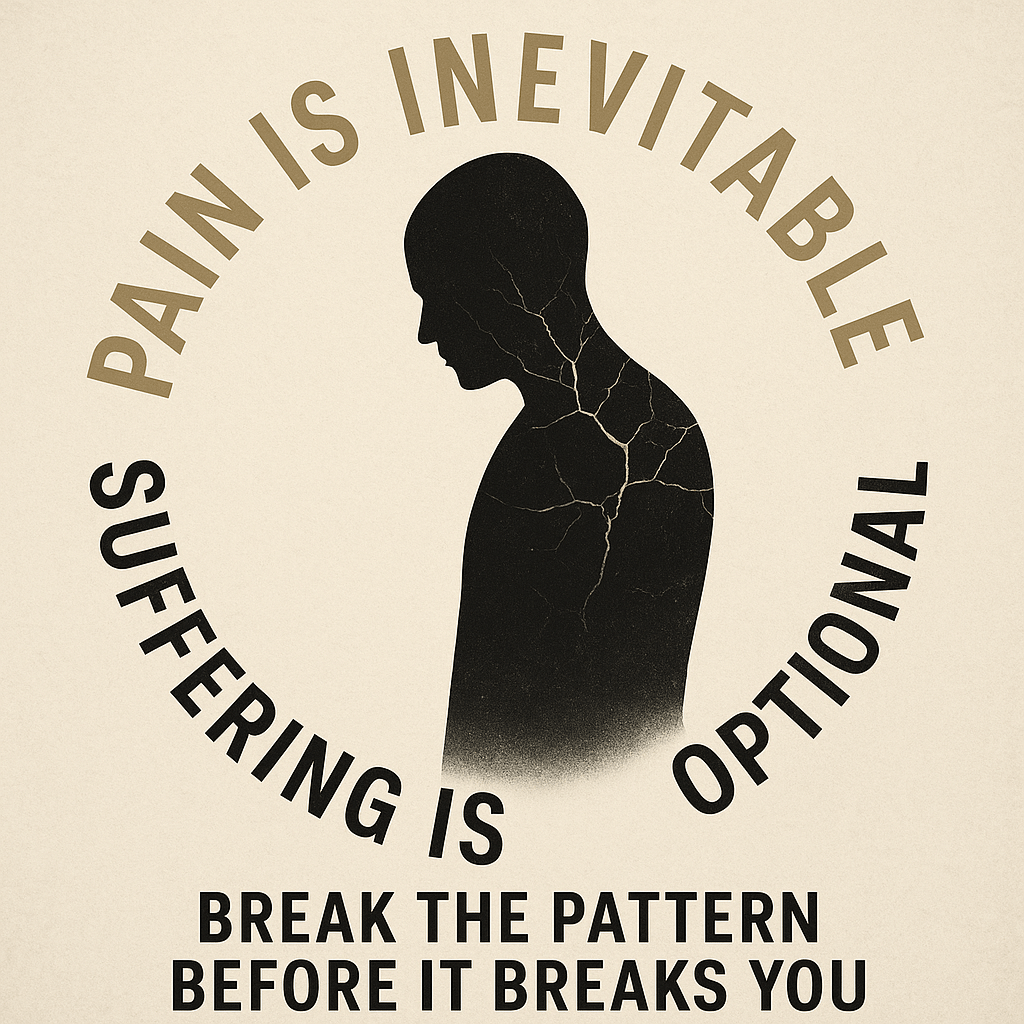
As the Tibetan proverb reminds us, “Pain is inevitable, suffering is optional.”
The circle of pain does not end by pretending it is not there. It ends when we face it, feel it, and choose differently. It ends when we stop using the people we love as emotional garbage cans for our anger, shame, contempt, frustration, or disgust. It ends when we take responsibility for breaking the pattern.
That is how we lead with integrity. That is how we protect the people we love. And that is how we stop pain from becoming someone else’s inheritance.
 Quackenbush Coaching LLC