“The Motherhood Manual Never Came But We Wrote It Anyway”

By Jewel Quackenbush

Twenty-seven years ago, I became a mother.

I didn’t know it then, but in that single, holy moment, my heart permanently relocated to someone else’s body. I was young, ambitious, unsure. I was still trying to figure out how to care for myself let alone a whole new life that would one day call me “Mom.”

And yet, motherhood met me where I was. With its soft chaos and sacred calling, it shaped me. It raised me while I raised her.

Mother’s Day rolls around every May, inviting flowers, cards, and tearjerking commercials that somehow always feature the perfect kitchen lighting. But real motherhood? It doesn’t fit in a vase. And it certainly doesn’t expire at midnight on the second Sunday of May.

Because you are a mother 365 days a year.

You are a nurse without credentials, a therapist without a couch. You’re an accountant, a chauffeur, a chef, a negotiator, a life coach, a spiritual advisor, a bedtime storyteller, and a walking, talking search engine for every misplaced backpack and broken heart.

You are also an educator, a guidance counselor, and a fierce protector.

You are always on. Even when you’re off the clock.

And let’s be clear your gender does not define your capacity to mother.

To the fathers, uncles, grandfathers, and brothers who have stepped fully into mothering roles with tenderness and grit: we see you too. Because nurturing is not a gendered trait. It’s a human one. And when love calls you to show up, you answer even if the world doesn’t quite know what to call you.

Whether you’re a mom by biology, adoption, spirit, or circumstance… whether you’re a full-time professional, stay-at-home warrior, or juggling both with one arm while stirring spaghetti with the other you are doing the sacred work of shaping the future.

And that matters.

Did you know Mother’s Day in the U.S. has roots as far back as the 19th century?

Activist Ann Reeves Jarvis organized “Mother’s Day Work Clubs” to support mothers in caring for their children. But it was her daughter, Anna Jarvis, who lobbied for an official holiday to honor the sacrifices mothers make every day. In 1914, President Woodrow Wilson signed it into national observance. Ironically, Anna later fought against the commercialization of Mother’s Day—because it wasn’t meant to be a marketing tool. It was meant to be a reverent pause.

So today, let’s reclaim that pause.

Let’s acknowledge that motherhood is not one-size-fits-all. It’s not just about giving birth it’s about giving. Giving love, energy, time, wisdom, space, structure, comfort, correction, and everything in between.

There are thousands of books on parenting.

What to Expect When You’re Expecting.

The First 12 Months.

Parenting with Purpose.

Volumes written by brilliant people with impressive credentials.

And still, nothing in those pages prepares you for the weight of holding a child who relies on you for everything.

Nothing explains the lump in your throat the first time they say your name.

No manual walks you through the moment when you’re running on two hours of sleep and instinct alone.

Because motherhood real motherhood is a lived experience.

You don’t read your way into it.

You become it. One choice, one sacrifice, one unshakable act of love at a time.

To every mother who has ever questioned, “Am I doing this right?” let me lovingly say: You are.

Because the best kind of mothering doesn’t come from perfection.

It comes from presence.

It comes from showing up.

It comes from continuing on, even when your tank is empty, and your coffee’s gone cold.

To the new moms holding everything together with a baby wipe and a whispered prayer…

To the grandmother’s parenting for the second time…

To the women who mother without a title…

To the dads doing double duty…

To the bonus moms, the auntie-moms, the grieving moms, the trying-to-become moms…

To every mother who has wiped tears, soothed storms, and dared to raise leaders in a chaotic world,

We see you. We thank you. We honor you.

And to the children reading this if you want to lead in life, start by honoring the ones who first led you. Your first coach, first teacher, first safe space, first “yes you can” when the world said no.

Motherhood is not for the faint of heart.

There are days we cry silently behind closed doors.

Then we dry our faces, square our shoulders, and do it all over again.

Because we were built for this.

If you’re at the end of your rope today, tie a knot. Hold on.

You’re not alone. You are needed. You are irreplaceable.

You are the story, the shelter, the song, and the strength.

And if I had to do it all over again—I would.

Because I have learned, I have grown and witnessed the fruit of my labor in the life I helped shape.

Happy Mother’s Day to every kind of mother.

With love and thunder,

Jewel Quackenbush

Chief Vision Officer | Quackenbush Coaching, LLC

#MothersDay2025# RealMotherhood #MotherhoodUnfiltered #NurtureAndLead #FathersWhoMother #ParentingTruths #SacredMotherhood #365DaysOfMotherhood #LeadWithLove #EmotionalLabor #MotherhoodJourney #RaisingTheFuture #ModernMotherhood #QuackenbushCoaching

#WithLoveAndThunder

#MomLifeUnscripted

#IntentionalParenting

#HonorTheMothers

#ThankYouMoms

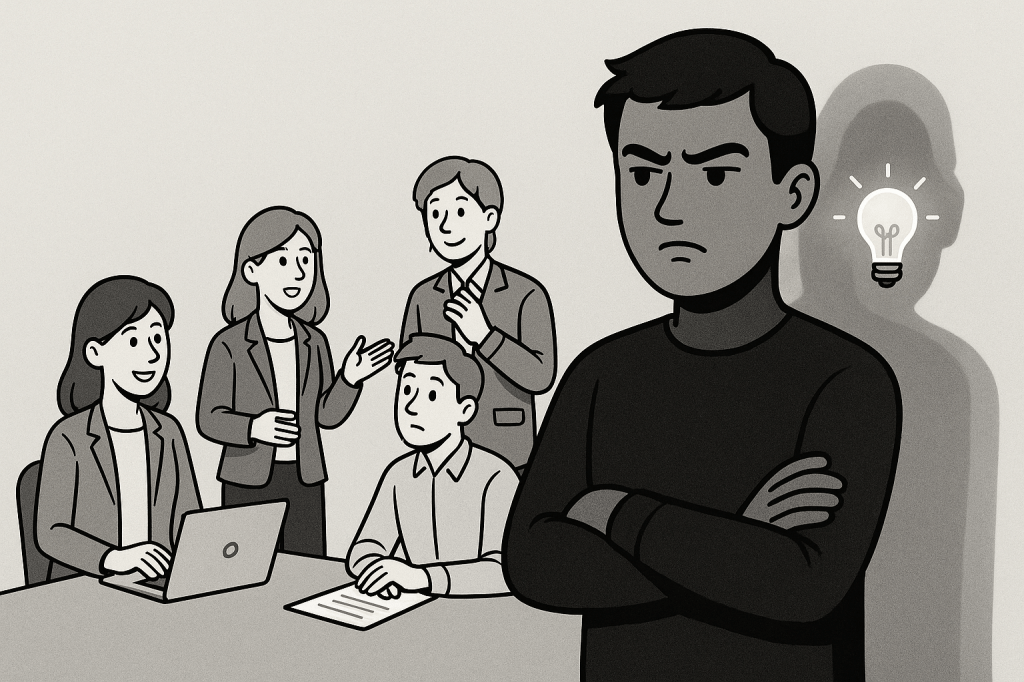
Passed Up for That Promotion? 

Here’s What to Do Next

By Jewel Quackenbush | Quackenbush Coaching

You put in the work.

You showed up early, stayed late, and raised your hand when no one else would.

You built relationships, solved problems, and became someone your team could count on.

Then, the opportunity you were waiting for the promotion you deserved opened up.

You gathered your courage, applied, and even received encouragement from leadership.

You interviewed. You dreamed. You dared to hope.

And then… they gave it to someone else.

Someone from outside.

Someone who didn’t know the culture, the people, the heart of the place the way you did.

And worst of all?

No meeting. No explanation. Just silence.

The Gut Punch of Being Passed Over

I know this feeling because I have lived it.

Years ago, while working for a major hotel in Chicago, I set my sights on a leadership role that I had essentially been performing unofficially.

I was qualified. I was connected. I was ready.

But instead of promoting me, they hired someone from the outside someone less qualified and when I pushed for an honest reason, I was told, “I looked too urban.”

Let that sink in.

It wasn’t about talent.

It wasn’t about capability.

It was about politics. And perception.

The gut punch was real.

The heartbreak was real.

And the temptation to shut down, to become bitter, was very, very real.

How Not to Let It Destroy You

In moments like these, we are standing at a crossroads.

We can either let disappointment harden us or let it strengthen us.

I chose to strengthen.

And here’s how you can, too:

Acknowledge the Hurt

Pretending it doesn’t hurt is not strength it’s avoidance.

Journal it, name it, sit with it, and give yourself the grace to grieve the version of your envisioned future.

“You can’t heal what you won’t feel.” – Iyanla Vanzant

Stay True to Your Work Ethic

Don’t let one moment define your career.

You were excellent before this happened. Stay excellent now.

Bitterness is a thief that robs you more than anyone else.

“Don’t become the thing you dislike.” 

Get Curious, Not Furious

Ask questions. Seek feedback, even if it’s uncomfortable.

Sometimes, you’ll get honest answers. Sometimes you won’t.

But the process of asking positions you as a learner not a victim.

Invest in Yourself

Take the class. Earn the certification. Work with a coach.

Not because you weren’t enough you are but because growing on your terms is the ultimate power move.

Remember Why You Started

No one can take away the passion that got you here.

Reconnect with your purpose, your pride, and your own intrinsic value.

“Be the leader you wish you had.” – Simon Sinek

When the Mirror Is Hard to Face: Honest Self-Reflection

As much as external factors can play a role, I also believe we owe it to ourselves to ask some hard but healthy questions:

  • Did I truly prepare for the interview? Sometimes, when we’re too comfortable with our internal leaders, we forget to “show up” like professionals. We get casual. We assume it’s a sure thing. But interviews even inside our companies deserve our full respect and preparation.
  • Did I take the interview seriously enough? Was I too relaxed? Too colloquial? Did I project the professionalism, strategic thinking, and future-focused mindset the role demands?
  • Was I actually ready for the new responsibilities? Excelling in your current role doesn’t automatically mean you are prepared for the challenges of the next level. Promotions aren’t just rewards but assignments of greater complexity, leadership, and accountability.

A Gentle Reminder

None of these reflections are meant to shame you.

They are intended to grow you.

True leadership isn’t about pretending we’re always right.

It’s about being willing to ask, “Where can I stretch next?”

because when we stay curious—about ourselves and the system—we stay powerful.

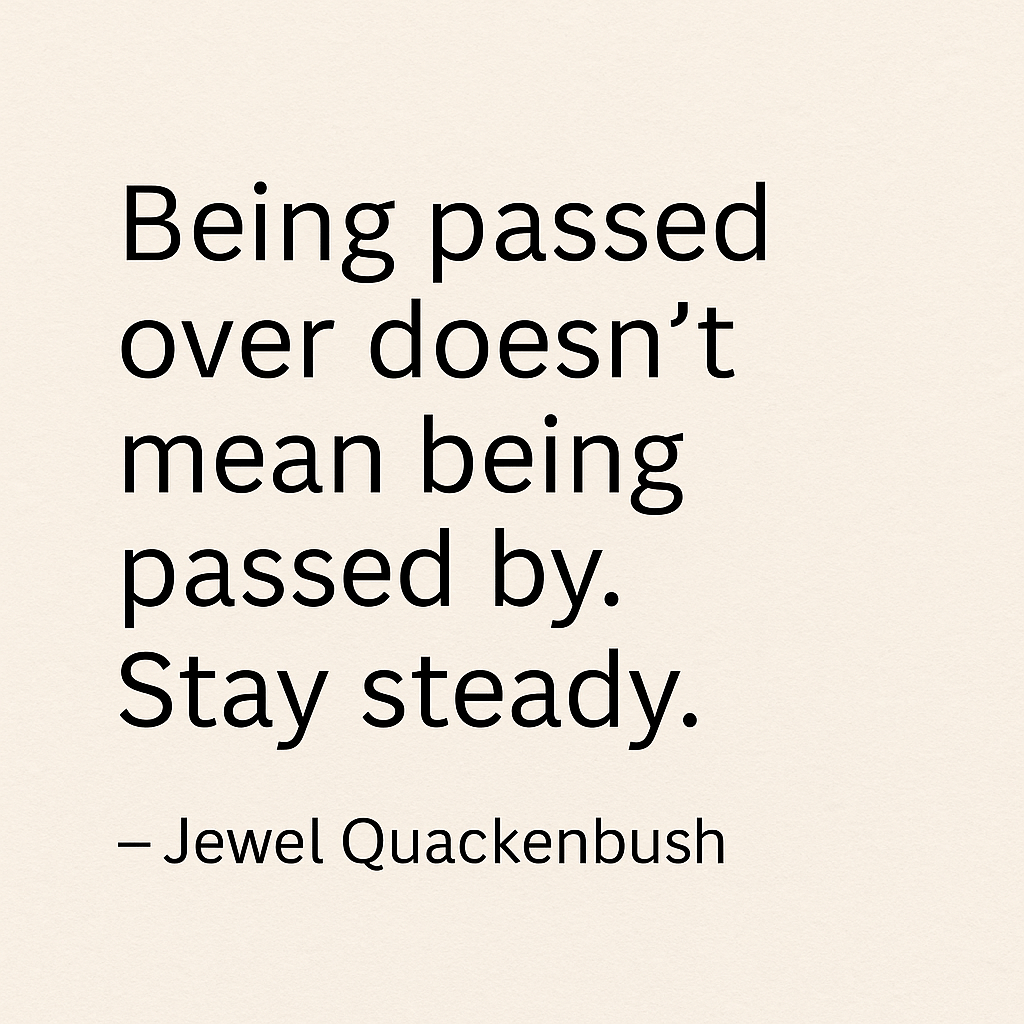
The “Stay Steady” Exercise

If you’re in the middle of this pain right now, try this:

1. Get a notebook.

2. Write down these four prompts and answer them honestly:

  • What am I feeling right now? (Name the emotions: anger, sadness, betrayal.)
  • What three things remain true about me, no matter what happened? (Example: “I am loyal. I am talented. I am respected by my peers.”)
  • What are two honest questions I can ask myself about my readiness for this opportunity? (Example: “Did I prepare fully for the interview? Was I truly ready for the scope of the new role?”)
  • What is one small, positive action I can take this week just for myself? (Example: enroll in a webinar, update your résumé, schedule a networking lunch.)

This list becomes your anchor when the emotions swell.

You are still worthy. You are still capable. You are still in charge of your own journey.

Getting passed over hurts sometimes more than words can explain.

But this is not your ending.

It’s an invitation to deepen your resilience, sharpen your vision, and rise on your own terms.

Keep leading.

Keep stretching your heart.

Keep betting on yourself.

Because you, my friend, are still a rockstar.

And no one can take that from you.

I believe real leadership begins with radical self-honesty and radical hope.

Keep rising. You are not alone.

– Jewel Quackenbush

Chief Vision Officer | Quackenbush Coaching LLC

#CareerGrowth #LeadershipWithHeart #PromotionPassedOver #CareerResilience #GrowthMindset #ExecutiveCoaching #QuackenbushCoaching #KeepStretching #StaySteady #InnerWorkMatters

What’s in your Go Bag?

A Guide to Staying Grounded When Life Won’t Let You Pause

Have you ever heard of a “go bag”?

In the world of first responders or in my case, as someone who once wore many hats during college, including the badge of an EMT, a go bag is a small backpack filled with essentials: a flashlight, snacks, first-aid supplies, and whatever you needed to stabilize a crisis on the spot.

It was a magical kind of preparedness,not because it made you superhuman, but because it gave you just enough to keep going.

You don’t pack it when the emergency happens. You have it ready before the storm comes.

Well, friend,I want you to imagine having one for your emotional wellbeing.

An emotional go bag is what you reach for when you’re maxed out, run down, and still have to keep going. It’s not indulgence. It’s inner triage. And it’s time more of us started packing one.

The Moment I Reached for Mine

I just returned from a trip that drained me. No pause. No recharge. I had to immediately jump into work, meetings, and administrative tasks each one requiring my full attention and presence.

That’s when I went to my emotional go bag.

In mine:

-Compassion, especially toward myself Discipline, not to push through, but to protect my energy.

-Miniature resets like a 15-minute guided meditation and a face mask while horizontal on the floor.

-Brain fuel hydration, walnuts, and a probiotic-rich smoothie

It sustained me until I could breathe again.

How to Know It’s Time to Reach for Your Go Bag

Too many of us wait until we’re falling apart before we allow ourselves care. Here are a few signs you’re overdue for an emotional timeout:

You’re snappy, tearful, or unusually irritable You feel like your thoughts are racing but you can’t focus You’re not resting, even when you’re resting Every request feels like a burden

That’s not laziness or weakness. That’s overload.

Stress vs. Anxiety (and Why It Matters)

Understanding the difference can help you reach for the right tools.

Stress is usually tied to a specific event or deadline. It’s your body’s response to pressure,temporary, and sometimes even motivating. Anxiety is more internalized and persistent. It’s the what ifs that live rent-free in your mind long after the deadline is gone.

Both activate the sympathetic nervous system, that fight, flight, freeze, or fawn state. And when left unchecked, they can affect digestion, sleep, memory, and even immunity.

Your Brain on Burnout

Let’s talk chemistry for a moment:

Cortisol: The stress hormone. Great in short bursts. Terrible when it never turns off.

Dopamine: The motivation molecule. Gives you that “I did it!” feeling. Serotonin: The stability chemical. Regulates mood, sleep, and digestion.

Oxytocin: The connection hormone. You feel it when someone really sees you,or when you receive a meaningful hug from someone you love.

Your go bag should aim to restore balance between these.

Nourishment is Non-Negotiable

Your emotional go bag shouldn’t just soothe your mind, it should feed your body.

When we’re stressed, we tend to either forget to eat or reach for things that spike our sugar and crash our focus.

Instead, try these gut-and-brain-boosting go-bag items:

Walnuts & pumpkin seeds – rich in Omega-3s and magnesium for brain support Probiotic-rich snacks – think kefir, yogurt, sauerkraut, or a fermented shot Herbal teas – calming blends like chamomile, ginger, or lavender support digestion and the nervous system.

Water – hydration is a form of emotional clarity A square of dark chocolate – for a dopamine lift that doesn’t derail your energy

Your brain and gut talk all day long. Feeding both means fueling clarity, resilience, and emotional stability.

Three Quick Add-Ons for Your Emotional Go Bag

1. Grounding Tool: Keep a calming object nearby a stone, a crystal, or even a scented hand lotion.

2. Time-Out Plan: Know your escape route. A 5-minute walk. A guided meditation. A dance break in the kitchen.

3. Permission Slip: Give yourself permission to not be available 24/7. Say no. Rest is a right.

You don’t have to earn rest.

You don’t have to explain your need for care.

You are allowed to stop before you break.

So, the question is:

What’s in your go bag?

And if you don’t have one—what would help you breathe, reset, and carry on with grace until your next full recharge?

Let’s build this practice together.

#QuackenbushCoaching #WATCHYourself #LeadershipWellness #EmotionalGoBag #BurnoutRecovery #ExecutiveResilience #StressAwareness #MindBodyReset #CoachingWithCompassion #SelfCareIsNotLuxury

The Storm

Last night was the first night of what meteorologists are calling a “1-in-1000-year rain event.” A severe thunderstorm blew through my little city, and it was only the beginning. Over the next few days, we’re bracing for relentless waves of wind, rain, hail, and even tornadoes. Entire areas are expecting four months’ worth of rain in just a few hours. Firetruck sirens howled. Tornado warnings rolled in. The wind beat against the windows.

There was no visibility, not even a foot ahead.

And yet, I was inside.

Safe.

Still.

And I realized something:

This storm?

It’s the perfect metaphor for what happens in our lives, especially in leadership.

Because sometimes, a storm doesn’t just arrive outside.

It erupts inside of us.

In our careers.

In our relationships.

In our decision-making.

And sometimes? It’s a one-in-1000-year event in our lives.

A massive, soul-shaking, gut-wrenching moment that hits so hard, you can’t imagine ever coming back from it.

We say something we can’t take back.

We hurt someone we care about.

We fumble a judgment call.

We misread a moment, or a person.

We disappoint, and we get disappointed.

We lose trust, make a mess, miss the mark.

And suddenly, it feels irreparable.

Irredeemable.

The shame storms roll in.

You question your value.

You replay what went wrong over and over.

You convince yourself this is career-ending, relationship-ending, life-altering.

But let me say this to you clearly:

Storms don’t last forever.

And neither does shame.

Around 1AM last night, the storm calmed.

The hail stopped. The sirens quieted.

And I found rest.

I wasn’t rested because the forecast cleared, I was rested because I gave myself permission to pause. To go inward. To acknowledge what I couldn’t control. And to prepare for what’s ahead.

That’s what we must do in leadership, too.

Pause.

Reflect.

Apologize.

Repair.

Rebuild.

Because apologizing isn’t weakness, it’s wisdom.

Reflection isn’t indulgent, it’s essential.

And you are not the sum of your worst moment.

But let’s talk about what happens after the storm.

Sometimes the aftermath is devastation.

Torn limbs. Flooded foundations.

Broken trust. Burned bridges.

Mistakes that carry real consequences.

It’s okay to name it: It’s devastating.

But here’s the truth:

If you survived it, you can rebuild from it.

If you’re a physician and you made an error, there’s still a path forward.

If you’re a leader who caused harm, you can choose repair.

If you’re in a relationship that feels fractured,you can rebuild connection.

Things can be reworked.

Reimagined.

Repaired.

Rewritten.

And even renewed.

And sometimes?

Sometimes we come out of the rubble with greater wisdom.

We build in fail-safes.

We recognize early warning signs.

We learn how to course-correct before it all collapses again.

We build back better.

We lead with a new kind of courage.

We love with a new kind of grace.

We work with a new kind of clarity.

Storms may shake us—but they can also shape us.

You are not alone. You are not irredeemable. And you are not too far gone.

I help leaders, professionals, and everyday people navigate the hardest moments of their lives and careers, not with shame, but with strategy. With vision. With heart.

Let’s fix it. Work with me.

Let’s rebuild what matters most, one moment at a time.

With empathy, vision, and courage,

Jewel

#ExecutiveCoaching

#CareerRecovery

#PersonalGrowth

#EmotionalIntelligence

#ResilientLeadership

#MistakesAndRedemption

#RebuildStronger

#StormsPass

#HumanFirstLeadership

#CoachingWithHeart

#QuackenbushCoaching

#LeadWithEmpathy

#ProfessionalHealing

#OneMomentAtATime

There is Beauty in This.

Pantry Days: Finding Strength in Simplicity

In a world that feels like it’s constantly shifting, where contracts fall through, clients pause services, and layoffs dominate headlines, many of us are quietly tightening our belts. What I’ve come to learn, both as a coach and a woman walking through it too, is that peace doesn’t always come from big solutions. Sometimes, it starts with a can of beans in the back of your pantry.

When our household hit a slow season, I could’ve spiraled. The weight of a lost contract or an empty calendar has a way of seeping into everything,our patience, our sleep, even the way we speak to the people we love. But instead of trying to pretend like nothing changed, I decided to acknowledge the shift, and respond in kind.

I Started with the Pantry

I challenged myself: Could we go one full week without spending a dime on groceries or restaurants? I cook nearly every day, so I opened my chest freezer, took inventory of my pantry, and started planning meals. That one small shift saved us $250 and gave me something far more valuable: control.

Suddenly, I wasn’t spiraling. I was creating. There’s something deeply grounding about knowing your family is nourished by your own hands and creativity. It was the reminder I needed: I may not control the market, but I do control my home.

Then, the Closet

From the pantry, I moved to my closet, one shoe at a time. I cleaned. I organized. I donated. And something inside me began to lift. Letting go of what I no longer wear reminded me that simplicity creates space. And in that space, grace flows more freely.

Giving Forward, Not Just Cutting Back

I’m also choosing to volunteer once a week, because when we serve others, we gain more than we give. New connections, new perspectives, and a sense of purpose that no paycheck can buy. This isn’t just about surviving hard times; it’s about transforming them.

Facing the Finances

The hardest part? Facing my credit cards. Every last one. I asked myself the hard questions:

• Why do I have this card?

• Is it helping or hurting me?

• Can I consolidate? Transfer the balance? Close it altogether?

It was daunting to see the numbers in black and white, but I remembered a truth I often tell my clients: “You can’t fix what you won’t face.” I took a deep breath and asked myself, How do you eat an elephant? The answer is always the same: One bite at a time.

Feeding My Brain Good Things

In this season of recalibration, I’m also feeding my mind. I pulled out a tool I’ve used before:

The $1,000 Challenge by Brian O’Connor. This book breaks down how to save (or reclaim) $1,000 a month in ten specific areas. It’s practical, doable, and a powerful reminder that small shifts add up.

Pantry Days aren’t about lack. They’re about alignment. They remind us to focus on what we do have, to simplify, to connect, and to be resourceful. And perhaps most importantly, they help us reclaim our peace when the world tries to steal it.

So if you’re in a season like mine,breathe. Start small. Start with what you can touch. And remember, you’re not alone.

We’re all just trying to make something beautiful out of the ingredients we’ve got.

Want more heart-centered, practical inspiration like this?

Subscribe to my blog and never miss a post that helps you build, rebuild, and bloom again.

#PantryDays #FamilyFinance #MindfulLiving #SlowSeasonStrong #ResilientLiving #QuackenbushCoaching #HolisticCoach #FinancialWellness #SimplifyToStrengthen #The1000DollarChallenge #CoachingWithHeart #WomenWhoLead #SeasonOfChange #LiveWithGrace #BudgetReset

Routine

by Jewel at Quackenbush Coaching

Today, I woke up exhausted.

Not the kind of exhaustion that a cup of coffee or a splash of cold water can fix.

I’m talking about a deep, head-to-toe fatigue that doesn’t quite have a name—but you know it when it hits. And I know exactly why.

I deviated from my evening routine.

I didn’t honor the ritual that usually winds my mind down, slows my breath, and helps me put the day to rest. Instead, I went to bed still doing mental gymnastics—worrying, planning, rehashing, overthinking… the brain-lifting version of deadlifts at midnight.

And surprise, surprise: I woke up feeling like I’d run a marathon in my sleep.

Has this ever happened to you?

You wake up more tired than when you went to bed.

You feel like your thoughts had an all-night rave and didn’t invite your peace.

You know you’re supposed to “just rest,” but your mind had other plans.

Let’s pause here for a truth-check:

If this kind of exhaustion is something you feel every single day—if no amount of sleep, hydration, or healthy habits are helping—it may be time to check in with a medical or mental health professional.

What I’m talking about today is a one-off. The kind of day that throws off your rhythm and reminds you how much you need that rhythm in the first place.

So what do you do when you feel off?

Identify why it’s happening. Honor what your body and mind are telling you.

If you need a mental health day and you can take it—take it. If your thoughts are looping, journal until they settle. If your body is begging for hydration and nutrients—feed it with intention. And if you need a reset, this is your green light.

Breathe. Seriously. Just breathe.

For those who think meditation is intimidating or confusing, let me simplify it:

Inhale slowly. Hold. Exhale longer than you inhaled. Repeat.

That’s it. That’s the start.

Breathwork isn’t a trend—it’s a tool.

When the mind is heavy, breath is the anchor.

Routine = Protection, Not Punishment

Let’s talk about routines—not as rigid schedules, but as intentional acts of self-respect.

They help us function, not falter.

Routines protect your peace, preserve your energy, and sharpen your clarity.

When we miss a step, we don’t fall—we reset.

This is where the H in my W.A.T.C.H. method comes in: Habits.

The small daily commitments that sustain us.

If you’ve fallen out of rhythm, don’t judge yourself—just return to it.

Here’s what I’m doing today:

Drinking water before coffee Eating leafy greens and whole foods Journaling to release the mental clutter Breathing intentionally Limiting mental noise and protecting my space

Because what I do today becomes how I feel tomorrow.

And what I feed—grows.

Quotes to Breathe Into Today:

“Almost everything will work again if you unplug it for a few minutes… including you.” — Anne Lamott

“If you don’t pick a day to rest, your body will pick it for you.” — Unknown

“You can’t stop the waves, but you can learn to surf.” — Jon Kabat-Zinn

A Final Metaphor for the Moment:

I picture a tightrope walker, high above the noise.

Not afraid of the height—but steady because of the rhythm.

Step. Balance. Breathe. Repeat.

That rhythm? It’s your routine.

And it’s always ready for you to return.

Journal Prompt:

Where have I fallen out of rhythm—and how can I step back in today?

RAK (Random Act of Kindness):

Send a kind message to someone who’s been unusually quiet lately. They may be carrying more than they’re saying.

With grace and grounding,

Your biggest cheerleader,

Jewel

Chief Vision Officer | Quackenbush Coaching

How to Mentally and Emotionally Prepare for a New Season


Spring Reset

Winter can slow us down—sometimes in good ways, sometimes in ways that leave us feeling stuck. But spring invites motion. It’s a season of renewal, fresh energy, and forward momentum.

You’re not alone if you’ve felt sluggish, unmotivated, or not yourself. But here’s the good news: You don’t have to wait for motivation to magically appear. You can create it.

1. Reset Your Routines

The way you start and structure your day matters. Even small shifts in your routine can help you regain energy, clarity, and focus.

  • Morning Upgrade – Start your day with five minutes of journaling, stretching, or quiet reflection instead of immediately reaching for your phone.
  • Midday Boost – Set a reminder to step outside, even if it’s just for a short walk around your building. A change of scenery recharges the mind.
  • Evening Wind-Down – Swap mindless scrolling for something more intentional: a book, a creative project, or a real conversation.

2. Revive Your Workspace

Your physical environment impacts your mental state, whether you realize it or not. Make it a space that inspires and energizes you.

  • Rearrange Your Desk – If your back faces the door, turn it around. What message does that send? Does it make you seem closed off? Less approachable? A simple shift in furniture can make you feel more open, engaged, and present.
  • Change the View—Swap out old pictures, add a plant, or bring in an art piece that makes you smile. Fresh visuals equal fresh energy.
  • Spring Gesture – It doesn’t have to be expensive! Surprise your team with a donut pit stop, small packets of seeds to plant, or handwritten thank-you notes. Small gestures have big impacts.

3. Refresh Your One-on-Ones & Meetings

If meetings feel stale, it’s time to shake things up.

  • Start with a Positive Check-in – Instead of diving straight into business, start by asking, “What’s something good that happened this week?
  • Move Your Meeting Outside – If possible, take a walking meeting. Fresh air = fresh ideas.
  • Rotate Who Leads: Give team members a chance to lead the discussion. This keeps engagement high and brings fresh perspectives.

4. Get Back on W.A.T.C.H.

Spring is the perfect time to take inventory of where you are and where you’re going.

  • Words – Are you speaking life into yourself and others?
  • Actions – Do your daily behaviors align with your values?
  • Thoughts – What’s taking up space in your mind? Are you feeding your focus or your fears?
  • Character – Who are you becoming through your choices?
  • Habits – Are your routines helping or hurting you?

5. Engage in Something New

One of the fastest ways to break out of a rut is to do something different.

  • Take a class – Creativity fuels energy. Try a craft, cooking, or professional development course.
  • Volunteer – A shift in focus can be the mental reset you need. Helping others brings clarity to your own journey.
  • Plan a staycation – You don’t have to go far to reset. Explore your city like a tourist. Visit a museum, take a scenic drive, or try a new restaurant.

6. Bring the Energy

If the workplace feels heavy, be the one to shift the vibe.

  • Shock your team (in a good way) by saying hello to people you don’t normally interact with.
  • Dress it up – Wear something bright, fun, or bold to lift the mood.
  • Make work feel good – Small moments of joy and connection create lasting impact.

Give Yourself Permission to Start Over

A reset doesn’t mean perfection—it means progress. You don’t need a grand, dramatic transformation. Start where you are with what you have.

What’s one small way you’re resetting for spring?

#SpringReset #WorkplaceWellness #PersonalGrowth #ProfessionalDevelopment #LeadershipMatters #MindsetShift #NewSeasonNewYou #SpringRefresh #Teamwork #WorkplaceCulture #LifeCoach #ExecutiveCoaching #LeadWithImpact #SelfLeadership #EnergyShift #FreshStart #EmployeeEngagement #CultureOfKindness #HumanConnection


I Need A Hug

Today, I Need a Hug

Today, I woke up sad.

Not the kind of sad that passes with a deep breath or a distraction, but the kind that sits heavy in your chest. The kind that makes you pause and wonder, How did I get here? The kind that makes the next step feel uncertain.

The past few days have been… character-building. A dear friend just received a difficult diagnosis—news that no one is ever truly ready for. And, on top of that, I lost a big coaching contract that will affect me financially. Through no fault of my own, just the reality of corporate cutbacks. Coaching and training are often the first to go when companies tighten their belts.

It’s a hit. Not just to my income but to my ego. If I’m honest, it knocked the wind out of me.

And here’s the thing: I know what I would tell my clients, my readers, my friends. I would remind them that adversity is a doorway, not a dead end. I would encourage them to feel it, to move through it, and to take one small step forward.

Now, it’s time to take my own advice.

When the Wind Gets Knocked Out of You, Pause—but Keep Moving

It’s important to feel our feelings. Really feel them. There is no shame in sadness, grief, or frustration. When we try to outrun our emotions, they don’t disappear; they just pile up, waiting for us to acknowledge them.

So, I’m sitting with mine today. I’m letting myself be in this moment.

But here’s what I also know: while sadness needs space, it does not need to become a stopping point. Forward motion—any motion—is the antidote to despair. It doesn’t have to be grand. It doesn’t have to be immediate. But it does have to be.

• I’m going to take a bath. A simple act of self-care, a reminder that my body and mind need tending.

• I’m going to do breathwork and reflect. Not to push away the sadness, but to sit with it and listen to what it’s telling me.

• I’m going to reach out—to the people who support me, the allies who see my value and will help me find the next opportunity.

Because when things fall apart, the only way to rebuild is to take one step, then another.

What I Recommend When Life Feels Heavy

If you’re in your own season of unexpected loss or uncertainty, here’s what might help:

📖 Read something that grounds you. I’m turning to No Mud, No Lotus: The Art of Transforming Suffering by Thích Nhất Hạnh—because sometimes, we need the wisdom of resilience to remind us of our own.

💨 Breathe, then move. Even if it’s just a slow inhale, a deep exhale, or a short walk outside. Movement shifts energy.

🛁 Prioritize self-care. Take a bath, drink tea, put on music that soothes or strengthens you.

📞 Call your people. We are not meant to do hard things alone. Someone in your circle is ready to remind you of your strength—reach for them.

📝 Reconnect with purpose. Even if the road ahead is uncertain, purpose is never truly lost. It just needs to be remembered.

One Bite at a Time, One Step at a Time

I don’t have all the answers today. But I know this: I will move forward. Not by force, not by pretending everything is okay, but by making space for the feelings, then taking one step at a time.

So, if today you also need a hug, take this as one from me. You are not alone. The next step is waiting, and when you’re ready—you’ll take it.

The Disorganized Leader

The Disorganized Leader—Why Your Chaos is Holding You (and Everyone Else) Back

Who you are, where you are, and how you show up—this is what shapes your life and leadership.

We don’t often think about it, but every interaction, every commitment (or lack thereof), and every habit we repeat reflects how we choose to show up in the world. Whether we like it or not, managing our Time, relationship times, and priorities directly influences the people around us.

The Disorganized Leader

Disorganization isn’t just about a cluttered desk or an inbox with 5,000 unread emails. It’s a leadership style. It’s a way of operating that creates chaos, frustration and missed opportunities. It shows up in a hundred small ways—how you handle communication, manage your Time, and how Timeshow up for the people who depend on you.

Signs You Might Be a Disorganized Leader:

  • You start every phone call or meeting with, “I just wanted to check in real quick, but I have another meeting soon.” Translation? I don’t really have Time for you.
  • You make casual plans with colleagues, clients, or friends (“Let’s get together soon”), but it never happens because you never follow through.
  • You send requests for input, ideas, or help but never close the loop.
  • Your team is constantly scrambling, missing deadlines, and playing catch-up—because they follow your example.

But here’s the real kicker—chances are, if you’re a disorganized leader, you’re also a disorganized person.

If you don’t believe me, take a personal audit:

  • Are you constantly rushing out the door, forgetting something every single Time?
  • Do you have projects you’ve started and abandoned in your personal life?
  • If you have kids, do they bounce from activity to activity without finishing anything?
  • Are you always the last to arrive at social gatherings, appointments, or personal commitments?
  • Do you push things off to the last second and then make it everyone else’s problem?

And yet, when your team starts showing the same signs of disorganization, you reprimand or discipline them for it.

Think about that. You’re disciplining them for the behavior you modeled.

Leadership isn’t just about telling people what to do—it’s about setting the tone, the culture, and the example. If you’re inconsistent, your team will be inconsistent. If you’re last-minute, your team will scramble. And if you don’t respect Time, don’t be surprised when deadlines are missed and work is rushed.

“I Don’t Have Time” vs. “I Don’t Want To”

Lao Tzu once said, “Time is a creative thing. To say ‘I don’t have time’ is like saying ‘I don’t want to.’”

Let that sink in.

When we repeatedly say we don’t have time, what we’re really saying is, I didn’t prioritize this. And while time constraints are real, much of what we call “too busy” is a lack of discipline.

Not Everything is a Diagnosis—Some of It is Just a Habit

Now, before anyone dismisses this as a condition beyond their control—pause.

Not everything is a struggle that should be dismissed as a condition affecting focus and concentration. There are real diagnoses—such as ADHD, executive dysfunction, and other neurodivergent challenges—that deserve respect, care, and appropriate accommodations. But for many, disorganization is simply a habit that can be addressed with intention and discipline.

The danger comes when we default to labeling every instance of procrastination, forgetfulness, or missed deadlines as something beyond our control. That mindset keeps us stuck.

The good news? If something is a habit, it can be changed.

Breaking the Cycle & Leading With Intention

If any of this resonates with you, the answer isn’t to beat yourself up—it’s to do something about it.

  • Start small. Pick one area of disorganization to improve—whether it’s better scheduling, clearer communication, or simply showing up on Time.
  • Honor your time commitments. If you tell someone you’ll call them back, call them back. If you make plans, show up.
  • Set the tone. Your team, your family, and the people around you will follow your lead. Show them what it looks like to lead with integrity, clarity, and respect.

So ask yourself:

Do you see yourself in this article?

If so, it’s Time to do something different.

If you’re ready to stop the cycle and lead with intention, let’s talk.

Let’s chat: Book Your Free Session

#Leadership #TimeManagement #Coaching #SelfAwareness #ProfessionalGrowth #Accountability #LastMinuteManager

Why Civility and Emotional Safety Matter in the Workplace

Simon Sinek once said, “Leadership is not about being in charge. Leadership is about taking care of those in your charge.”

This simple yet profound statement captures what it means to be a true leader. Yet, as I work with executives and teams across industries, I’ve noticed a troubling trend: the higher leaders climb the corporate ladder, the more disconnected they can become from the very people they’re meant to serve. 

It’s not always intentional. Leadership pressures—tight deadlines, bottom-line results, and stakeholder expectations—can create a bubble where leaders lose touch with the human side of their roles. But here’s the hard truth: when leaders become tone-deaf to their teams’ emotional and practical needs, they erode trust, stifle innovation, and ultimately hinder their own success. 

The good news? It doesn’t have to be this way. By reconnecting with their humanity and prioritizing **civility** and **emotional safety**, leaders can create environments where people feel valued, heard, and empowered to do their best work. 

The Problem: Leaders Out of Touch

Let’s face it—leadership can be isolating. The higher you go, the fewer people feel comfortable giving honest feedback. Over time, this can create a dangerous disconnect. Leaders may start to believe their narratives, forgetting what it’s like to be in the trenches. 

I’ve seen it happen repeatedly: a CEO sets unrealistic expectations without considering the team’s capacity. A CFO dismisses concerns about burnout because “that’s just how the industry works.” A manager talks over employees in meetings, unintentionally silencing valuable perspectives. 

These behaviors might seem small, but they have a cumulative effect. According to a Harvard Business Review study, 58% of employees trust strangers more than their boss. Let that sink in. More than half of employees feel safer with a stranger than with the person who’s supposed to be leading them. 

This isn’t just a morale issue—it’s a business issue. When people don’t feel emotionally safe, they’re less likely to speak up, take risks, or bring their whole selves to work. And that’s a loss for everyone. 

The Power of Civility and Emotional Safety

So, what does it mean to create emotional safety? It’s about fostering an environment where people feel secure enough to express their thoughts, concerns, and limitations without fear of judgment or retribution. 

Civility plays a considerable role here. It’s not just about being polite—it’s about showing genuine respect and care for the people around you. A study by the American Psychological Association found that employees who feel respected are 55% more engaged at work. More than half of your team performs at a higher level simply because they feel valued. 

But emotional safety goes deeper. It’s about creating a space where people can say, *“I don’t know,”* *“I need help,”* or *“I made a mistake,”* without fear of repercussions. It’s about recognizing that your team members are human beings with their own struggles, strengths, and limits. 

How Leaders Can Reconnect with Their Human Side

If you’re a leader reading this, I want you to know that reconnecting with your humanity isn’t a sign of weakness—it’s a sign of strength. Here are a few ways to start: 

1. Practice Active Listening

– When was the last time you truly listened to your team—not to respond, but to understand? Schedule regular one-on-one check-ins and ask open-ended questions like, “What’s on your mind?”or “How can I support you?”

2. Lead with Vulnerability

– Share your challenges and mistakes. When leaders show vulnerability, it humanizes them and permits others to do the same. 

3. Acknowledge Limitations

– Instead of pushing your team to “do more with less,” ask, What do you need to succeed? Recognize that everyone has limits; respecting those limits is key to sustainable performance. 

4. Model Civility and Respect

– Small acts of kindness—like saying “thank you” or acknowledging someone’s effort—can significantly impact. Remember, civility isn’t just about what you say; it’s about how you make people feel. 

5. Create Safe Spaces for Honest Feedback

– Implement tools like anonymous surveys or open-door policies to encourage honest communication. And when you receive feedback, act on it. Nothing builds trust faster than showing your team that their voices matter. 

The Ripple Effect of Human-Centered Leadership

When leaders prioritize civility and emotional safety, the ripple effect is profound. Teams feel valued and empowered, trust and collaboration increase and innovation and problem-solving thrive. 

But perhaps the most beautiful part is this: when you take care of those in your charge, you don’t just transform your team—you transform yourself. You rediscover the joy of leadership, not as a position of power, but as an opportunity to serve. 

So, I’ll leave you with this challenge: Take a moment to reflect on your leadership. Ask yourself: 

– Do my team members feel safe, to be honest with me?

– Am I taking care of those in my charge, or am I just focused on being in charge?

If the answer isn’t what you’d hoped, don’t despair. Leadership is a journey, not a destination. And every step you take toward greater civility and emotional safety is a step toward becoming the leader your team deserves. 

And hey, if you’re reading this and thinking, “Okay, this might be me… thank you for being self-aware. That’s the first step! Second, I’d love to help you reconnect with your human side and build a workplace where everyone thrives. 

Let’s chat! 

You can schedule a free 60-minute session with me here: 

/60minhttps://calendly.com/quackenbushcoaching/60min